Recognition matters more than perfection.
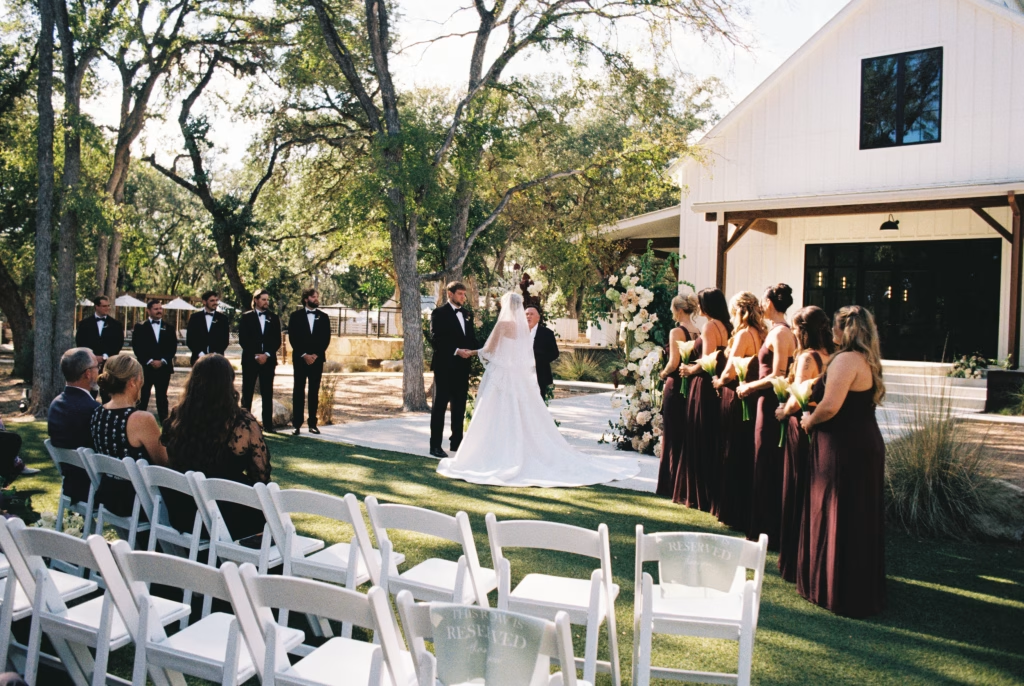
This fear doesn’t usually announce itself clearly. It will show up as a pause whilst scrolling. As a subtle disconnect when everything looks beautiful, but somehow wrong. As the nagging thought “What if this doesn’t feel like us?”
Most people aren’t worried about looking bad. They’re worried about looking unfamiliar.
They fear opening a gallery months later and seeing a version of themselves that feels polished, impressive…and slightly off. Like a costume they wore well, but never lived in.
That concern is worth listening to.
The difference isn't Talent. It's intention.
Many photographers are very skilled. That’s not the dividing line. The difference is whether a photographer approaches a wedding as something to shape or something to witness.
When someone arrives with a fixed aesthetic in mind, the day becomes material. moments are adjusted. Emotions are smoothed. Movement is guided toward what photographs well.
Nothing about that is aggressive. It’s often subtle. Quiet. Efficient.
But over time, it changes the feeling of the day. Along with it, the truth of what’s remembered.
A photographer who won’t turn you into someone else starts somewhere different. They are paying close attention prior to directing. Watching before adjusting. Letting your natural demeanor lead.
These images that come from that place don’t feel styled. They feel deeply recognized.
Read the Language. It Tells You Everything.
Before you ever look at a portfolio, read the words. Does the photographer talk about:
- how they pose
- how they style
- how they “create” moments
or do they talk about:
- how they listen
- how they observe
- how they decide when to step back
Photographers who honor individuality tend to speak with restraint. Their language is more specific and less performative.
You won’t see promise of transformations. Instead you’ll read about attention. That is no accident.
Look for emotional variety, not visual consistency
A cohesive portfolio can be beautiful. But uniformity can be a warning sign. So, as you look through a body of work, notice:
- Whether couples move differently
- Whether emotions feel differently
- Whether personality comes through without explanation
If every couple stands the same way, reacts the same way…pretty much feels the same way. That dear reader is not timelessness. That is control.
Work that lasts tends to feel human first. Some frames are soft. Some are awkward. And some are luminous in a way that could NEVER be planned.
You should be able to imagine yourself inside the images without imagining yourselves changing for them.
Ask questions that reveal posture, not process
Instead of asking how someone poses, ask:
- What they notice first when they enter a room
- how they know when to step in and when to disappear
- how they prepare so couples don’t feel managed.
The answers should not sound rehearsed. A photographer who won’t overwrite you won’t talk about making you better. They’ll talk about understanding you. About paying attention long before the camera comes up.
They won’t offer certainty through control. They will offer steadiness through presence.
Be cautious of promises that sound like improvement
There’s a particular kind of reassurance that should make you pause.
“I’ll make you feel like models.”
“I know all the flattering angles.”
“I’ll make sure you look incredible.”
Those promises aren’t unkind but they reveal a mindset.
Photographers who chase improvement often don’t trust what’s already there. The work that lasts doesn’t come from fixing. It comes from seeing clearly.
You are not a problem to solve. You are a reality to understand.
Notice how you feel after the conversation
This is the part people tend to dismiss and shouldn’t.
After you speak with a photographer, notice what settles. Do you feel:
- calmer
- less self-aware
- more trusting of the experience
Or do you feel like you need to perform? To be “good” at being photographed? The body usually knows before the mind catches up.
Photographers who won’t turn you into someone else don’t create pressure. They create room. Room to be present, to be imperfect, and to live the day without monitoring it.
That ease doesn’t just affect the experience. It shapes the photographs theselves.
A final thought
Wanting to recognize yourself in your wedding photographs isn’t insecurity. Its discernment.
You’re not asking for control over how you look. You are asking for fidelity to who you are.
When a photographer works from observation instead of imposition, when their presence feels steady rather than directive, that fear tends to soften on its own.
You won’t have to wonder whether you’ll recognize yourselves.
you will.
And that recognition will matter long after everything else fades.